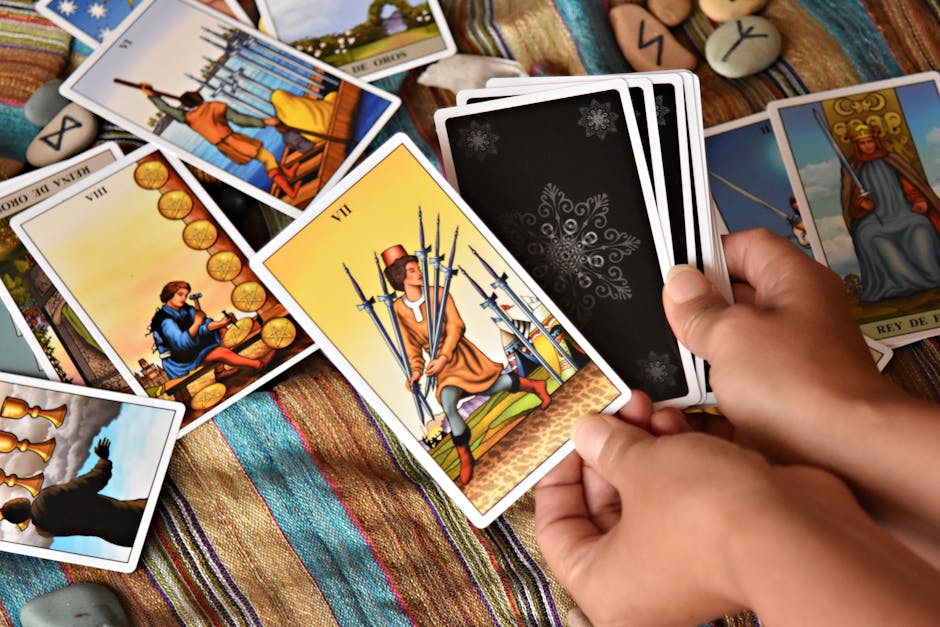
Major Arcana Journey
The Major Arcana is the backbone of every tarot deck. These 22 cards trace the Fool’s Journey from innocence to enlightenment, and when one appears in a reading, it signals a moment of real significance. This guide covers every card with upright and reversed meanings, grouped into three stages of the journey.
✨ Quick Summary: A complete guide to all 22 Major Arcana tarot cards with upright and reversed meanings, grouped into three stages of the Fool’s Journey from innocence to enlightenment.
The Fool’s Early Journey (Cards 0–VII)
The first eight cards represent the beginning of conscious awareness. The Fool steps into the world and encounters the fundamental forces that shape human experience: willpower, wisdom, authority, love, structure, and choice.
0 — The Fool
Upright: New beginnings, spontaneity, innocence. Reversed: Recklessness, naivety, poor judgment.
The Fool stands at the edge of a cliff with a white rose in hand and a small dog at his heels. This card marks the start of a journey where the outcome is unknown but the spirit is willing. In a reading, The Fool asks you to take a leap of faith, trusting that the universe will provide a net.
I — The Magician
Upright: Manifestation, willpower, resourcefulness. Reversed: Manipulation, untapped potential, trickery.
The Magician stands before a table bearing all four suit symbols — cup, pentacle, sword, and wand — with one hand raised toward heaven and the other pointing to the earth. He channels divine energy into material reality. When this card appears, you already have every tool you need to succeed.
II — The High Priestess
Upright: Intuition, mystery, inner knowledge. Reversed: Secrets withheld, disconnection from intuition, surface-level thinking.
Seated between the pillars of Boaz and Jachin, the High Priestess guards the threshold to the subconscious. The scroll of Torah in her lap and the crescent moon at her feet connect her to hidden wisdom. This card urges you to look beyond the obvious and trust what you sense beneath the surface.
III — The Empress
Upright: Abundance, fertility, nurturing. Reversed: Creative block, dependence, neglecting self-care.
The Empress reclines in a lush garden with a field of wheat at her feet and the symbol of Venus on her shield. She embodies the creative force of nature, maternal care, and sensory pleasure. In readings, she often signals a period of growth, comfort, and the need to connect with the natural world.
IV — The Emperor
Upright: Authority, structure, stability. Reversed: Rigidity, tyranny, lack of discipline.
The Emperor sits on a stone throne adorned with four ram heads, representing Aries energy and decisive leadership. He holds an ankh scepter in one hand and an orb in the other, symbolizing dominion over life and the material realm. This card calls for order, boundaries, and taking responsibility for your domain.
V — The Hierophant
Upright: Tradition, spiritual guidance, conformity. Reversed: Rebellion, unorthodox methods, questioning authority.
The Hierophant sits between two pillars with two acolytes kneeling before him, his right hand raised in a gesture of benediction. He represents established institutions, formal education, and shared belief systems. When drawn, this card may point to a mentor, a need to follow established processes, or a spiritual calling within a traditional framework.
VI — The Lovers
Upright: Union, alignment, meaningful choices. Reversed: Disharmony, imbalance, misaligned values.
In the Rider-Waite-Smith depiction, a man and woman stand beneath the archangel Raphael, with the Tree of Knowledge and the Tree of Life behind them. This card is about more than romance — it represents a choice driven by values and the integration of opposing forces. When The Lovers appears, a significant decision about commitment or personal alignment is at hand.
VII — The Chariot
Upright: Determination, willpower, triumph. Reversed: Lack of direction, aggression, self-doubt.
A warrior rides a chariot drawn by one black and one white sphinx, steering them forward through sheer force of will. The canopy of stars above and the city walls behind him show he has left the safety of the known world. The Chariot signals victory through discipline and the ability to harness opposing forces toward a single goal.
The Middle Path (Cards VIII–XIV)
These seven cards deal with the inner work of maturity. The traveler now confronts questions of courage, solitude, consequence, sacrifice, and balance. The lessons here are less about external events and more about character development.
VIII — Strength
Upright: Courage, patience, inner resolve. Reversed: Self-doubt, weakness, insecurity.
A woman gently closes the jaws of a lion, an infinity symbol hovering above her head. There is no force in her posture — only calm authority. Strength in tarot is not about brute power but about the quiet mastery of fear and impulse. This card appears when compassion and endurance are your greatest assets.
IX — The Hermit
Upright: Introspection, solitude, inner guidance. Reversed: Isolation, withdrawal, loneliness.
The Hermit stands atop a mountain holding a lantern containing a six-pointed star, lighting only the next few steps ahead. His grey cloak symbolizes invisibility and detachment from the material world. This card calls for a period of deliberate solitude to seek answers that only silence can provide.
X — Wheel of Fortune
Upright: Cycles, fate, turning points. Reversed: Resistance to change, bad luck, stagnation.
The Wheel features the four fixed signs of the zodiac — Aquarius, Scorpio, Leo, Taurus — at its corners, with a sphinx atop and a serpent descending. The Hebrew letters Yod He Vau He appear on the wheel itself. When this card turns up, a significant shift is underway, and the best response is to flow with the cycle rather than fight it.
XI — Justice
Upright: Fairness, truth, accountability. Reversed: Dishonesty, unfairness, avoidance of responsibility.
Justice sits with a sword raised in her right hand and balanced scales in her left, eyes forward and unblinded. The purple veil behind her conceals deeper truths that have yet to be revealed. This card signals that a decision will be made based on objective facts, and that actions have measurable consequences.
XII — The Hanged Man
Upright: Surrender, new perspective, pause. Reversed: Stalling, resistance, martyrdom.
A man hangs upside down from a T-shaped living tree, one leg crossed behind the other, a halo of light around his head. His expression is serene, not tormented. The Hanged Man teaches that sometimes progress comes from letting go, shifting your viewpoint, and accepting a voluntary sacrifice of comfort for wisdom.
XIII — Death
Upright: Transformation, endings, transition. Reversed: Resistance to change, fear of letting go, stagnation.
Death rides a white horse carrying a black flag with a white five-petaled rose, the symbol of the Tudor rose and the number five representing change. Before him, a king lies fallen, a bishop prays, and a child offers flowers. This card rarely predicts physical death — it signals the necessary end of one chapter so another can begin.
XIV — Temperance
Upright: Balance, moderation, patience. Reversed: Excess, imbalance, lack of harmony.
An angel with one foot on land and one in water pours liquid between two cups in an endless flow. The triangle within a square on the angel’s chest represents spirit grounded in matter. Temperance is the art of blending opposites — work and rest, logic and emotion, giving and receiving — into something sustainable.
📌 Key Point: Three or more Major Arcana cards in a single spread signals that you are navigating a major life chapter with deep karmic or spiritual undertones.
The Higher Lessons (Cards XV–XXI)
The final seven cards deal with the soul’s deepest challenges and ultimate liberation. Shadow work, upheaval, healing, and transcendence define this stage. These cards often appear when life is demanding real change at a fundamental level.
XV — The Devil
Upright: Bondage, addiction, materialism. Reversed: Liberation, reclaiming power, breaking free.
The Devil sits on a half-cube throne with a man and woman loosely chained at his feet — their chains are wide enough to slip off if they choose. The inverted pentagram above his head represents the dominance of matter over spirit. This card exposes the illusions, habits, and attachments that keep you trapped by choice rather than by force.
XVI — The Tower
Upright: Sudden upheaval, revelation, destruction of false structures. Reversed: Avoidance of disaster, fear of change, delayed breakdown.
Lightning strikes the crown of a stone tower, sending two figures plummeting toward the rocky ground. Twenty-two flames — shaped like the Hebrew letter Yod — fall through the sky. The Tower strips away everything built on a weak foundation. While terrifying, the destruction it brings clears the ground for something authentic.
XVII — The Star
Upright: Hope, renewal, serenity. Reversed: Despair, disconnection, lack of faith.
A naked woman kneels by a pool, pouring water from two jugs onto both the land and the water’s surface, beneath a sky of eight-pointed stars. The large central star represents the soul’s guiding light after devastation. After the Tower’s destruction, The Star arrives with healing, clarity, and a renewed sense of purpose.
XVIII — The Moon
Upright: Illusion, fear, subconscious. Reversed: Clarity emerging, releasing fear, facing truth.
A full moon shines between two towers while a dog and wolf howl at it, and a crayfish crawls from a pool onto a winding path. The Moon illuminates the landscape of dreams, anxieties, and projections that live below conscious awareness. This card warns that things are not as they seem and intuition must be balanced with discernment.
XIX — The Sun
Upright: Joy, vitality, success. Reversed: Temporary sadness, delayed happiness, overconfidence.
A naked child rides a white horse beneath a bright sun, with sunflowers blooming behind a stone wall. The child’s nakedness represents pure innocence and the absence of pretense. The Sun is the most unambiguously positive card in the deck — it signals clarity, achievement, and a period where things genuinely go well.
XX — Judgement
Upright: Reflection, reckoning, inner calling. Reversed: Self-doubt, refusal to learn, ignoring a calling.
The archangel Gabriel blows a trumpet from the clouds while figures rise from coffins with arms outstretched. The red cross on the banner represents the intersection of the material and spiritual. Judgement asks you to honestly evaluate your past, forgive yourself where needed, and answer the calling that has been growing louder.
XXI — The World
Upright: Completion, integration, accomplishment. Reversed: Incompleteness, shortcuts, unfinished business.
A dancing figure wrapped in a purple scarf floats within a laurel wreath, surrounded by the same four zodiac figures from the Wheel of Fortune. She holds two wands, signifying balance between the active and receptive. The World marks the successful end of a cycle — a moment of wholeness before the next journey begins.
Quick Reference Table
| Number | Card | Upright Keywords | Reversed Keywords |
|---|---|---|---|
| 0 | The Fool | New beginnings, spontaneity, innocence | Recklessness, naivety, poor judgment |
| I | The Magician | Manifestation, willpower, resourcefulness | Manipulation, untapped potential, trickery |
| II | The High Priestess | Intuition, mystery, inner knowledge | Secrets withheld, disconnection, surface thinking |
| III | The Empress | Abundance, fertility, nurturing | Creative block, dependence, neglect |
| IV | The Emperor | Authority, structure, stability | Rigidity, tyranny, lack of discipline |
| V | The Hierophant | Tradition, guidance, conformity | Rebellion, unorthodox methods, questioning |
| VI | The Lovers | Union, alignment, meaningful choices | Disharmony, imbalance, misaligned values |
| VII | The Chariot | Determination, willpower, triumph | Lack of direction, aggression, self-doubt |
| VIII | Strength | Courage, patience, inner resolve | Self-doubt, weakness, insecurity |
| IX | The Hermit | Introspection, solitude, inner guidance | Isolation, withdrawal, loneliness |
| X | Wheel of Fortune | Cycles, fate, turning points | Resistance to change, bad luck, stagnation |
| XI | Justice | Fairness, truth, accountability | Dishonesty, unfairness, avoidance |
| XII | The Hanged Man | Surrender, new perspective, pause | Stalling, resistance, martyrdom |
| XIII | Death | Transformation, endings, transition | Resistance to change, fear, stagnation |
| XIV | Temperance | Balance, moderation, patience | Excess, imbalance, lack of harmony |
| XV | The Devil | Bondage, addiction, materialism | Liberation, reclaiming power, breaking free |
| XVI | The Tower | Upheaval, revelation, destruction | Avoidance, fear of change, delayed breakdown |
| XVII | The Star | Hope, renewal, serenity | Despair, disconnection, lack of faith |
| XVIII | The Moon | Illusion, fear, subconscious | Clarity emerging, releasing fear, facing truth |
| XIX | The Sun | Joy, vitality, success | Temporary sadness, delayed happiness, overconfidence |
| XX | Judgement | Reflection, reckoning, inner calling | Self-doubt, refusal to learn, ignoring calling |
| XXI | The World | Completion, integration, accomplishment | Incompleteness, shortcuts, unfinished business |
💡 Pro Tip: Study the Major Arcana as a connected story rather than isolated keywords. The narrative arc from The Fool to The World will make every card easier to remember.
Reading Major Arcana in Different Positions
The position a Major Arcana card occupies in a spread changes its emphasis significantly. Understanding positional context is just as important as memorizing card meanings.
Past position: A Major Arcana card here indicates that a foundational life event or lesson is actively shaping the current situation. The Tower in a past position, for example, suggests a previous upheaval whose aftershocks are still being felt. The Empress in the past may indicate a nurturing relationship or creative period that set the stage for what followed.
Present position: This is where Major Arcana cards carry their strongest weight. A card here represents the dominant theme of the querent’s current experience. The Hermit in the present suggests an active period of withdrawal and soul-searching. Death in the present points to a transformation that is happening right now, not in the future.
Future position: Major Arcana in a future position signals that significant events or lessons are approaching. However, these are not fixed — they represent the most likely outcome based on current energy. The Wheel of Fortune here suggests an approaching turning point. The Star in a future position is a strong indicator that healing and hope are on the horizon.
Advice or action position: When a Major Arcana card lands in an advice position, treat it as a high-priority directive. The Hanged Man as advice says to pause and change your perspective before acting. Strength as advice says to lead with patience and compassion rather than force.
Obstacle position: A Major Arcana card as an obstacle identifies a deep challenge — not a minor inconvenience. The Moon as an obstacle warns of illusions or fears clouding judgment. The Devil as an obstacle points to an attachment or unhealthy pattern that must be confronted before progress is possible.
The Major Arcana cards are not louder versions of the Minor Arcana — they operate on a different level entirely. When they appear, the reading shifts from the everyday into the territory of lasting significance. Study them as a connected story, and they will speak far more clearly than any memorized keyword list ever could.
References
- Wikipedia. “Major Arcana.”
- Biddy Tarot. “Major Arcana Tarot Card Meanings.”
- Labyrinthos. “Major Arcana List.”