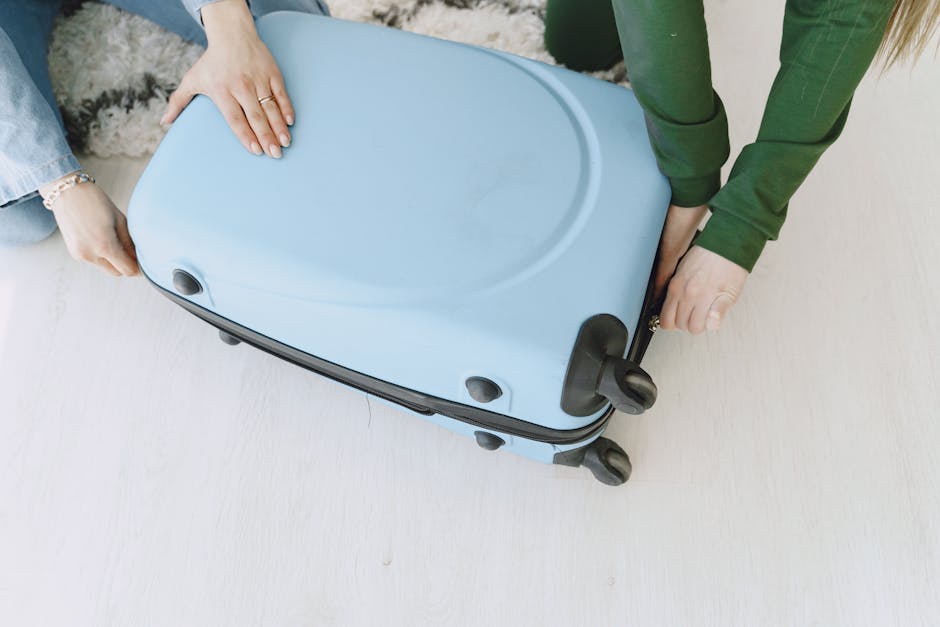
Packing Categories
Packing for an international trip is one of those tasks that feels straightforward until you are standing at your suitcase the night before departure, wondering if you have everything. This guide eliminates that uncertainty with a category-by-category checklist, a carry-on size reference chart for major airlines, and the capsule wardrobe formula that experienced travelers rely on.
Print this list, check items off as you pack, and travel with the confidence that nothing important was left behind.
✨ Quick Summary: A complete international packing checklist covering documents, electronics, clothing (with the 5-4-3-2-1 capsule formula), toiletries, health supplies, and carry-on size limits for major airlines.
Documents: The Non-Negotiable Category
Your documents are the foundation of international travel. Missing a single item here can end your trip before it starts.
Essential documents to pack:
- Passport — Check expiration dates. Many countries require at least 6 months of validity beyond your travel dates. Renew early if yours is close.
- Visa or electronic travel authorization — Research requirements at least 8 weeks before departure. Many countries now use electronic systems like ESTA (US), eTA (Canada), or ETIAS (Europe, launching for many travelers).
- Travel insurance documents — Print your policy number and emergency contact details. Save a digital copy in your email as well.
- Photocopies of all documents — Carry paper copies of your passport photo page, visa, insurance card, and flight itineraries separate from the originals. Store digital scans in cloud storage.
- Flight confirmations and hotel reservations — Print backup copies in case your phone battery dies at immigration.
- International driving permit — Required in many countries if you plan to rent a car. Obtain one from your national automobile association before departure.
- Emergency contact card — A physical card with your emergency contacts, hotel address, embassy phone number, and any medical information written in both English and the local language.
Electronics: Stay Powered and Connected
Power Adapters by Region
| Region | Plug Type | Voltage | Countries |
|---|---|---|---|
| North America | Type A/B | 120V | US, Canada, Mexico, Japan |
| Europe | Type C/F | 230V | France, Germany, Spain, Italy, most of EU |
| United Kingdom | Type G | 230V | UK, Ireland, Singapore, Hong Kong |
| Australia/NZ | Type I | 230V | Australia, New Zealand, China, Argentina |
| India | Type D/M | 230V | India, Nepal, Sri Lanka |
Electronics checklist:
- Universal power adapter — Get one with USB-C and USB-A ports built in. Brands like Epicka and Ceptics cover all plug types in a single device.
- Portable power bank — A 10,000-20,000 mAh power bank provides 2-4 full phone charges. Must go in carry-on luggage, not checked bags (airline regulation).
- Charging cables — Bring at least two cables for your phone plus one for any other device. Pack a short cable for the power bank and a longer one for wall charging from inconvenient outlet locations.
- Phone with offline maps downloaded — Download Google Maps or Maps.me offline maps for your destination before leaving home Wi-Fi.
- Headphones or earbuds — For flights, transit, and any time you need to block out noise. Noise-canceling models make long flights significantly more comfortable.
- E-reader — Optional but saves space versus physical books on longer trips.
Clothing: The 5-4-3-2-1 Capsule Wardrobe
The 5-4-3-2-1 packing rule creates a versatile wardrobe from minimal items. Every piece should coordinate with every other piece, giving you dozens of outfit combinations.
The Formula
- 5 tops — 3 short-sleeve shirts and 2 long-sleeve options. Choose neutral colors (black, navy, gray, white) with one or two accent colors. Merino wool and synthetic blends resist odor and dry quickly.
- 4 bottoms — 2 pairs of pants and 2 shorts (or skirts). Include one pair that works for both casual sightseeing and a nicer dinner.
- 3 layers/accessories — 1 lightweight jacket or fleece, 1 rain shell, 1 scarf or shawl. Layers handle temperature swings better than heavy coats.
- 2 pairs of shoes — 1 comfortable walking shoe for all-day sightseeing and 1 sandal or lighter shoe for evenings and beach days. Break in new shoes before your trip.
- 1 hat or statement piece — A sun hat, baseball cap, or a dressier accessory that pulls outfits together.
The 7-Day Clothing Formula
For a full week of travel, this is the expanded packing list:
- 7 pairs of underwear
- 4 pairs of socks (merino wool dries overnight)
- 1 swimsuit
- 1 set of sleepwear (doubles as loungewear)
- 1 dressier outfit for evenings out
Layering system explained: Start with a moisture-wicking base layer. Add an insulating mid-layer like a fleece or down jacket. Top with a waterproof and windproof outer shell. This three-layer system works from tropical evenings to alpine mornings.
💡 Pro Tip: Switch to solid toiletries (shampoo bars, solid deodorant, bar soap) to free up your entire TSA liquid bag for other essentials.
Toiletries: TSA 3-1-1 Rule and Solid Alternatives
The TSA 3-1-1 rule for carry-on liquids: each container must be 3.4 ounces (100ml) or smaller, all containers fit inside 1 quart-sized clear plastic bag, and each passenger gets 1 bag.
Liquid Toiletries (in your quart bag)
- Toothpaste (travel size)
- Sunscreen (travel size — buy full size at your destination)
- Contact lens solution (if applicable)
- Any liquid medications
Solid Alternatives That Save Space
Switching to solid toiletries frees up your entire liquid bag for other essentials:
- Shampoo bar — Lasts 50-80 washes and takes up almost no space
- Conditioner bar — Same compact benefit
- Solid deodorant — Not subject to liquid restrictions
- Bar soap — Works for body and hand washing
- Solid perfume or cologne — Dab-on formats are TSA-friendly
Other Toiletries
- Toothbrush and floss
- Razor
- Hair ties and clips
- Lip balm with SPF
- Hand sanitizer (travel size, counts as liquid)
- Microfiber towel (for hostels and beaches)
Health and First Aid
- Prescription medications — Bring enough for your entire trip plus a few extra days. Keep them in original labeled bottles. Carry a copy of your prescription.
- Basic first aid kit — Adhesive bandages, antiseptic wipes, blister pads (critical for walking trips), pain relievers, anti-diarrhea medication, antihistamines, and motion sickness pills.
- Insect repellent — Essential for tropical and subtropical destinations. DEET-based products are most effective.
- Rehydration sachets — Oral rehydration salts are lightweight and invaluable for stomach issues or dehydration from heat and long flights.
- Copies of prescriptions and vaccination records — Some countries require proof of yellow fever vaccination or other immunizations for entry.
Money: Cards, Cash, and Banking
- Two different credit or debit cards — Carry cards from two different networks (Visa and Mastercard) in case one is declined. Keep them in separate locations.
- Notify your bank before departure — Call or use your banking app to set a travel notice so your cards are not frozen for suspicious foreign transactions.
- Small amount of local currency — Get $50-$100 worth of local cash before arrival for taxis, tips, and small purchases. Airport exchange rates are terrible, so use an ATM at your destination for better rates.
- No-foreign-transaction-fee card — Cards like the Charles Schwab debit card or Capital One travel cards waive foreign transaction fees and ATM fees worldwide.
- Money belt or hidden wallet — A slim under-clothing pouch holds backup cash and a copy of your passport in case of theft.
Comfort Items for Long Flights
- Neck pillow — Memory foam or inflatable models that compress small
- Earplugs — Foam earplugs block engine noise for sleeping on flights and in noisy hostels
- Eye mask — A contoured mask that does not press on your eyelids
- Compression socks — Reduce swelling on flights over 4 hours and lower the risk of deep vein thrombosis
- Refillable water bottle — Fill after security to stay hydrated on the flight
Bags: Choosing the Right Luggage
Carry-On Size Limits by Major Airlines
| Airline | Carry-On Size (inches) | Carry-On Size (cm) | Weight Limit |
|---|---|---|---|
| American Airlines | 22 x 14 x 9 | 56 x 36 x 23 | No limit |
| Delta | 22 x 14 x 9 | 56 x 36 x 23 | No limit |
| United Airlines | 22 x 14 x 9 | 56 x 35 x 22 | No limit |
| Southwest | 24 x 16 x 10 | 61 x 41 x 25 | No limit |
| Ryanair | 21.7 x 15.7 x 7.9 | 55 x 40 x 20 | 10 kg |
| EasyJet | 22 x 17.7 x 9.8 | 56 x 45 x 25 | No limit |
| British Airways | 22 x 18 x 10 | 56 x 45 x 25 | 23 kg |
| Lufthansa | 21.7 x 15.7 x 9.1 | 55 x 40 x 23 | 8 kg |
| Emirates | 21.7 x 15 x 7.5 | 55 x 38 x 20 | 7 kg |
| ANA (Japan) | 21.7 x 15.7 x 9.8 | 55 x 40 x 25 | 10 kg |
| Qantas | 22 x 14.2 x 9.1 | 56 x 36 x 23 | 7 kg |
Recommended Bag Setup
- Carry-on rolling bag or travel backpack — 40-45 liter capacity fits everything in the 5-4-3-2-1 system
- Packable daypack — A lightweight 15-20 liter bag that folds into its own pocket. Use it for daily sightseeing and as your personal item on flights.
- Packing cubes — Organize clothing by category and compress items to save 20-30% of space. A set of 3-4 cubes is sufficient.
- Laundry bag — A simple drawstring bag separates dirty clothes from clean ones
The “Don’t Forget” Last-Minute Checklist
Print this checklist and tape it to your front door. Complete these items in the final 24 hours before departure:
- Charge all devices to 100%
- Download offline maps for your destination
- Screenshot or print boarding passes
- Notify your bank of travel dates
- Set email out-of-office (if applicable)
- Check weather forecast and adjust clothing if needed
- Confirm airport transportation
- Lock all windows and doors at home
- Set light timers or smart home devices
- Take out trash and perishable food
- Give a spare key to someone you trust
- Confirm travel insurance is active
- Check passport expiration (6+ months remaining)
- Pack chargers and cables last (so they are on top)
- Put liquids bag in an accessible pocket for security screening
⚠️ Important: Check your passport expiration date now — many countries require at least 6 months of validity beyond your travel dates, and renewals can take weeks.
Packing Strategy: How to Fit It All
Start by laying everything out on your bed. Remove one item from each category — you probably do not need it. Then pack in this order:
- Shoes go at the bottom of your bag, stuffed with socks and small items
- Heavy items like jeans and jackets go next
- Packing cubes with lighter clothing fill the middle
- Toiletry bag goes on top or in a side pocket
- Electronics and documents go in the most accessible compartments
Roll soft clothing instead of folding to minimize wrinkles and save space. Use the inside of shoes to store small items like belts, chargers, or sunglasses cases.
If your bag is overflowing, apply the “have I used this on my last three trips?” test. If the answer is no, leave it behind. Almost anything you forget can be purchased at your destination, usually for less than you would pay at home.
The goal is a bag light enough to carry up a flight of stairs without strain. If you cannot do that, you have packed too much.