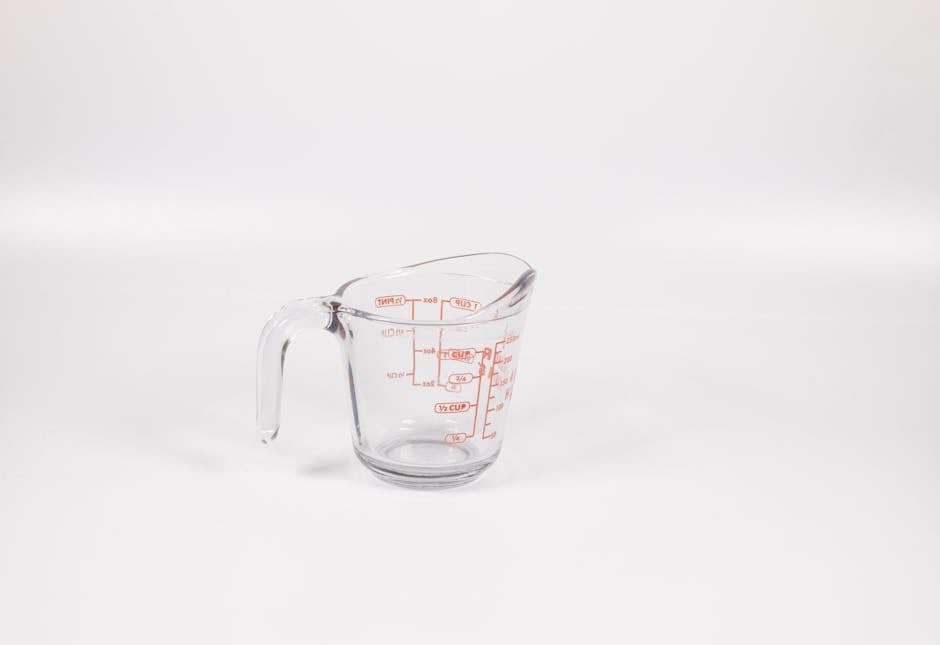
Quick Conversion Reference
Nothing derails a recipe faster than a measurement mistake. Whether you are converting a European recipe that uses grams, scaling a dish to feed a crowd, or simply trying to remember how many tablespoons are in a quarter cup, having a reliable reference saves time and prevents errors. This guide covers every conversion you will encounter in a home kitchen.
✨ Quick Summary: The complete kitchen measurement cheat sheet — volume, weight, temperature, butter sticks, egg substitutions, and international differences — with printable tables for your cabinet door.
Volume Conversions
Volume measurements are the most common in American cooking. These conversions let you move between teaspoons, tablespoons, cups, and metric units.
US Volume Equivalents
| Measurement | Equivalent |
|---|---|
| 1 tablespoon | 3 teaspoons |
| 1/8 cup | 2 tablespoons |
| 1/4 cup | 4 tablespoons |
| 1/3 cup | 5 tablespoons + 1 teaspoon |
| 1/2 cup | 8 tablespoons |
| 2/3 cup | 10 tablespoons + 2 teaspoons |
| 3/4 cup | 12 tablespoons |
| 1 cup | 16 tablespoons |
| 1 cup | 48 teaspoons |
| 1 pint | 2 cups |
| 1 quart | 4 cups |
| 1 gallon | 16 cups |
US to Metric Volume Conversions
| US Measurement | Metric Equivalent |
|---|---|
| 1 teaspoon | 5 mL |
| 1 tablespoon | 15 mL |
| 1 fluid ounce | 30 mL |
| 1/4 cup | 60 mL |
| 1/3 cup | 79 mL |
| 1/2 cup | 118 mL |
| 2/3 cup | 158 mL |
| 3/4 cup | 177 mL |
| 1 cup | 236 mL |
| 1 pint (2 cups) | 473 mL |
| 1 quart (4 cups) | 946 mL |
| 1 gallon | 3,785 mL (3.785 L) |
Weight Conversions
Weight measurements are more precise than volume and are standard in professional baking and in most countries outside the United States. If you do not own a kitchen scale, these conversions will help you work with recipes that list ingredients in grams or ounces.
Ounces to Grams
| Ounces | Grams |
|---|---|
| 0.5 oz | 14 g |
| 1 oz | 28 g |
| 2 oz | 57 g |
| 3 oz | 85 g |
| 4 oz (1/4 lb) | 113 g |
| 5 oz | 142 g |
| 6 oz | 170 g |
| 8 oz (1/2 lb) | 227 g |
| 10 oz | 283 g |
| 12 oz (3/4 lb) | 340 g |
| 16 oz (1 lb) | 454 g |
| 32 oz (2 lb) | 907 g |
Pounds to Kilograms
| Pounds | Kilograms |
|---|---|
| 1 lb | 0.45 kg |
| 2 lb | 0.91 kg |
| 3 lb | 1.36 kg |
| 5 lb | 2.27 kg |
| 10 lb | 4.54 kg |
Common Ingredient Weights
This is where volume-to-weight conversions matter most. One cup of flour does not weigh the same as one cup of sugar because their densities differ. These weights assume proper measuring technique (spoon and level for flour, packed for brown sugar).
Baking Staples
| Ingredient | 1 Cup Weight |
|---|---|
| All-purpose flour | 120 g (4.25 oz) |
| Bread flour | 127 g (4.5 oz) |
| Cake flour | 114 g (4 oz) |
| Whole wheat flour | 128 g (4.5 oz) |
| Granulated sugar | 200 g (7 oz) |
| Powdered sugar | 120 g (4.25 oz) |
| Brown sugar (packed) | 220 g (7.75 oz) |
| Cocoa powder | 86 g (3 oz) |
| Cornstarch | 128 g (4.5 oz) |
| Baking soda | 288 g (10 oz) per cup |
Dairy and Fats
| Ingredient | 1 Cup Weight |
|---|---|
| Butter | 227 g (8 oz) |
| Heavy cream | 232 g (8.2 oz) |
| Milk | 244 g (8.6 oz) |
| Sour cream | 230 g (8.1 oz) |
| Cream cheese | 232 g (8.2 oz) |
| Vegetable oil | 218 g (7.7 oz) |
Other Common Ingredients
| Ingredient | 1 Cup Weight |
|---|---|
| Honey | 340 g (12 oz) |
| Maple syrup | 312 g (11 oz) |
| Peanut butter | 258 g (9.1 oz) |
| Rolled oats | 90 g (3.2 oz) |
| White rice (uncooked) | 185 g (6.5 oz) |
| Chocolate chips | 170 g (6 oz) |
| Shredded coconut | 93 g (3.3 oz) |
| Chopped nuts | 120 g (4.25 oz) |
Temperature Conversions
Temperature conversion is essential when following recipes from different countries. American recipes use Fahrenheit while most of the world uses Celsius. Gas mark numbers appear in many British recipes.
Fahrenheit to Celsius (Common Oven Temperatures)
| Fahrenheit | Celsius | Gas Mark | Description |
|---|---|---|---|
| 225°F | 107°C | 1/4 | Very low |
| 250°F | 121°C | 1/2 | Very low |
| 275°F | 135°C | 1 | Low |
| 300°F | 149°C | 2 | Low |
| 325°F | 163°C | 3 | Moderate low |
| 350°F | 177°C | 4 | Moderate |
| 375°F | 190°C | 5 | Moderate high |
| 400°F | 204°C | 6 | Hot |
| 425°F | 218°C | 7 | Hot |
| 450°F | 232°C | 8 | Very hot |
| 475°F | 246°C | 9 | Very hot |
| 500°F | 260°C | 10 | Extremely hot |
The Conversion Formula
To convert Fahrenheit to Celsius: subtract 32, then multiply by 5/9.
To convert Celsius to Fahrenheit: multiply by 9/5, then add 32.
Example: 350°F to Celsius = (350 - 32) x 5/9 = 177°C
For a quick mental estimate, subtract 30 and divide by 2. This gives an approximate result that is close enough for most cooking purposes. Example: 400°F - 30 = 370, divided by 2 = 185°C (actual is 204°C, so this shortcut is rough but useful in a pinch for lower temperatures).
Butter Measurements
Butter in the United States is sold in sticks with markings on the wrapper, but recipes from other countries list butter by weight or volume. This table eliminates the confusion.
| Butter Amount | Sticks | Cups | Tablespoons | Grams | Ounces |
|---|---|---|---|---|---|
| 1/4 stick | 0.25 | 1/8 cup | 2 tbsp | 28 g | 1 oz |
| 1/2 stick | 0.5 | 1/4 cup | 4 tbsp | 57 g | 2 oz |
| 3/4 stick | 0.75 | 3/8 cup | 6 tbsp | 85 g | 3 oz |
| 1 stick | 1 | 1/2 cup | 8 tbsp | 113 g | 4 oz |
| 1.5 sticks | 1.5 | 3/4 cup | 12 tbsp | 170 g | 6 oz |
| 2 sticks | 2 | 1 cup | 16 tbsp | 227 g | 8 oz |
| 4 sticks | 4 | 2 cups | 32 tbsp | 454 g | 16 oz (1 lb) |
Measuring cold butter: Cut the stick at the wrapper markings. Each marking on a standard US butter wrapper represents one tablespoon.
Measuring softened butter: Press softened butter firmly into a dry measuring cup, eliminating air pockets, then level the top with a straight edge.
📌 Key Point: Weight measurements are more precise than volume — a kitchen scale eliminates cup-size confusion across US, UK, and Australian systems.
Egg Size Substitutions
Recipes in the United States are developed using large eggs unless otherwise stated. If you have a different size, these substitutions keep your ratios correct.
Egg Size by Weight (without shell)
| Egg Size | Average Weight |
|---|---|
| Small | 43 g (1.5 oz) |
| Medium | 50 g (1.75 oz) |
| Large | 57 g (2 oz) |
| Extra-large | 64 g (2.25 oz) |
| Jumbo | 71 g (2.5 oz) |
Substitution Chart (equivalent to large eggs)
| Large Eggs Needed | Medium Eggs | Extra-Large Eggs | Jumbo Eggs |
|---|---|---|---|
| 1 | 1 | 1 | 1 |
| 2 | 2 | 2 | 2 |
| 3 | 4 | 3 | 2 |
| 4 | 5 | 3 | 3 |
| 5 | 6 | 4 | 4 |
| 6 | 7 | 5 | 5 |
For one or two eggs, the size difference is negligible in most recipes. The substitution matters more when a recipe calls for three or more eggs, particularly in baking where liquid ratios are critical.
Measuring Tips for Accuracy
Dry Ingredients: The Spoon and Level Method
This is the standard method for measuring flour and other dry ingredients in baking.
- Fluff the flour in its bag or canister with a spoon or fork. Flour compacts during storage, and fluffing aerates it back to its intended density.
- Spoon the flour gently into your dry measuring cup until it overflows above the rim. Do not shake or tap the cup, as this settles the flour and adds extra.
- Level the top by sweeping a straight edge (the back of a knife or a chopstick) across the rim of the cup.
Scooping directly from the bag with the measuring cup packs the flour and can add 20 to 30 percent more than intended. In a recipe calling for three cups of flour, that error translates to nearly an extra cup, which is enough to produce a dry, dense result.
Liquid Ingredients: Eye-Level Reading
Place your liquid measuring cup on a flat surface and pour in the liquid. Bend down so your eyes are level with the measurement markings. Read the measurement at the bottom of the meniscus (the curved surface of the liquid). Reading from above causes you to overfill because the liquid surface appears lower than it actually is.
Brown Sugar: Pack It
Brown sugar is always measured packed unless a recipe specifically says otherwise. Press it firmly into a dry measuring cup with the back of a spoon. When turned out, the sugar should hold the shape of the cup.
Sticky Ingredients: Oil the Cup
For honey, molasses, peanut butter, and corn syrup, spray or coat the measuring cup with a thin layer of cooking oil before adding the ingredient. The sticky substance slides right out instead of clinging to the cup, giving you a more accurate measurement and easier cleanup.
💡 Pro Tip: Never scoop flour directly from the bag — the spoon-and-level method prevents adding up to 30% extra flour, which is the most common baking measurement mistake.
International Differences: UK vs. US Measurements
Recipes travel across borders easily in the internet age, but measurement systems do not always translate directly. Being aware of these differences prevents costly mistakes, especially in baking.
Cup Sizes
| System | Cup Size |
|---|---|
| US customary cup | 236 mL (8 US fluid ounces) |
| UK / Imperial cup | 284 mL (10 Imperial fluid ounces) |
| Australian cup | 250 mL |
| Japanese cup | 200 mL |
The US and UK cup difference is approximately 20 percent. For cooking (soups, stews, sauces), this difference rarely matters. For baking, it can be the difference between a cake that rises beautifully and one that is too wet or too dry.
Tablespoon Sizes
| System | Tablespoon Size |
|---|---|
| US tablespoon | 14.8 mL (commonly rounded to 15 mL) |
| UK tablespoon | 17.7 mL |
| Australian tablespoon | 20 mL |
The Australian tablespoon is notably larger. If you are following an Australian recipe, four US tablespoons equal approximately three Australian tablespoons.
The Solution: Weigh When Precision Matters
For baking, a kitchen scale eliminates all cup-size confusion. A recipe calling for 120 grams of flour is 120 grams whether you are in New York, London, or Sydney. Inexpensive digital kitchen scales cost between ten and twenty dollars and are one of the best investments a home baker can make.
For cooking, volume differences between systems are rarely significant enough to affect the outcome. A tablespoon more or less of soy sauce or broth will not ruin a stir-fry.
Quick Conversion Shortcuts to Memorize
These approximations are useful when you are cooking (not precision baking) and need fast mental math.
- 1 ounce is roughly 30 grams
- 1 cup of water weighs roughly 240 grams
- 1 cup of flour weighs roughly 120 grams
- 1 stick of butter is half a cup or 113 grams
- 350°F is roughly 175°C
- 400°F is roughly 200°C
- 1 tablespoon is 3 teaspoons
- 4 tablespoons make a quarter cup
- 1 liter is just over 4 cups
Print out the tables in this guide and tape them inside a cabinet door. Having conversions visible at a glance is far more practical than pulling out your phone with flour-covered hands every time you need a quick reference.
References
- USDA Agricultural Research Service — Source for standardized ingredient weights and nutritional data used in the common ingredient weights tables.
- NIST: Weights and Measures — The National Institute of Standards and Technology provides official US measurement standards and definitions.
- Wikipedia: Cooking Weights and Measures — Comprehensive reference for international measurement systems and their historical development.