Light Level Guide
Not every home comes with floor-to-ceiling windows and abundant natural light. North-facing rooms, basement apartments, offices, and hallways often have minimal sunlight, but that does not mean they have to be empty of greenery. Plenty of houseplants not only tolerate low light but actually prefer it, since their native habitat is the forest floor beneath a dense canopy.
✨ Quick Summary: These 15 low-light houseplants are selected for their tolerance of dim conditions, infrequent watering, and general neglect. Whether you have a dark office or a north-facing room, there is a hardy plant on this list that will thrive.
This guide covers 15 of the hardiest, most forgiving low-light houseplants. Each one has been selected for its tolerance of dim conditions, infrequent watering, and general neglect. If you have struggled to keep plants alive in the past, this list is your starting point.
Plant Comparison Table
| Plant | Light Needs | Watering | Pet Safe | Air Purifying | Difficulty (1-5) |
|---|---|---|---|---|---|
| Pothos | Low to medium | Every 7-14 days | No (toxic) | Yes | 1 |
| Snake Plant | Low to bright | Every 14-21 days | No (toxic) | Yes | 1 |
| ZZ Plant | Low to medium | Every 14-21 days | No (toxic) | Yes | 1 |
| Peace Lily | Low to medium | Every 7-10 days | No (toxic) | Yes | 2 |
| Cast Iron Plant | Very low | Every 14-21 days | Yes | Minimal | 1 |
| Chinese Evergreen | Low to medium | Every 7-14 days | No (toxic) | Yes | 2 |
| Dracaena | Low to medium | Every 10-14 days | No (toxic) | Yes | 2 |
| Philodendron | Low to medium | Every 7-14 days | No (toxic) | Yes | 1 |
| Spider Plant | Low to bright | Every 7-10 days | Yes | Yes | 1 |
| Parlor Palm | Low to medium | Every 7-14 days | Yes | Yes | 2 |
| Prayer Plant | Low to medium | Every 7-10 days | Yes | Minimal | 3 |
| Calathea | Low to medium | Every 7-10 days | Yes | Minimal | 3 |
| Boston Fern | Medium (indirect) | Every 5-7 days | Yes | Yes | 3 |
| Lucky Bamboo | Low to medium | Keep water fresh weekly | Yes | Minimal | 1 |
| Rubber Plant | Low to bright | Every 10-14 days | No (toxic) | Yes | 2 |
⚠️ Important: If you have cats or dogs that chew on plants, check the “Pet Safe” column carefully. Plants marked “No (toxic)” can cause irritation or illness in pets. Stick with spider plants, Boston ferns, parlor palms, prayer plants, calatheas, cast iron plants, and lucky bamboo for pet-friendly homes.
1. Pothos (Epipremnum aureum)
Light: Low to medium indirect | Water: Every 7-14 days | Pet safe: No | Difficulty: 1/5
Pothos is the undisputed champion of easy-care houseplants. Its trailing vines grow several feet long, making it ideal for hanging baskets, high shelves, or trailing along a bookcase. The heart-shaped leaves come in solid green, variegated green and white, or golden yellow depending on the variety.
Pothos tells you when it needs water by slightly drooping its leaves. Give it a thorough drink and it perks up within hours. It tolerates inconsistent watering, low humidity, and temperature fluctuations that would stress most other plants. You can propagate it endlessly by cutting a stem below a node and placing it in water.
Care tip: Variegated varieties like Golden Pothos need slightly more light than solid green types to maintain their color. In very low light, they may revert to all green.
2. Snake Plant (Sansevieria trifasciata)
Light: Low to bright indirect | Water: Every 14-21 days | Pet safe: No | Difficulty: 1/5
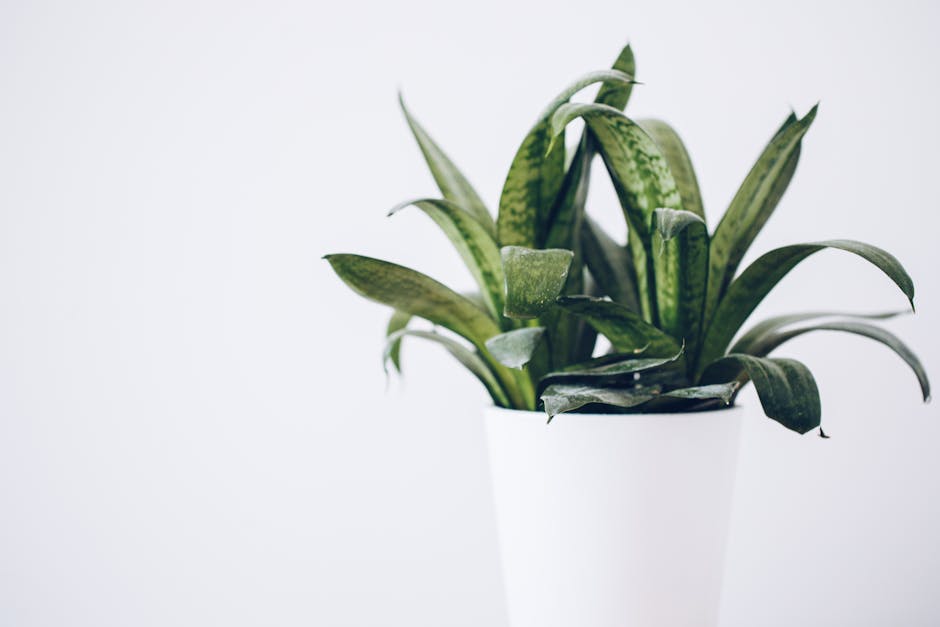
Snake plants, also called mother-in-law’s tongue, are among the most indestructible houseplants in existence. Their stiff, upright leaves grow vertically, making them excellent for narrow spaces and corners. They tolerate the full spectrum of indoor light conditions from dim corners to bright windowsills.
The most common way to kill a snake plant is overwatering. Their thick, succulent leaves store water efficiently, and their roots rot quickly in soggy soil. Water only when the soil is completely dry, and use a pot with a drainage hole. In winter, you may only need to water once a month.
Care tip: Snake plants are among the few houseplants that convert carbon dioxide to oxygen at night rather than during the day, making them popular bedroom plants.
3. ZZ Plant (Zamioculcas zamiifolia)
Light: Low to medium indirect | Water: Every 14-21 days | Pet safe: No | Difficulty: 1/5
The ZZ plant’s glossy, dark green leaves reflect light and add a polished, modern look to any space. Its thick rhizomes (underground stems) store water, allowing it to survive weeks of neglect. The ZZ plant tolerates low light, low humidity, and irregular watering without complaint.
Growth is slow, which means the plant maintains its shape without frequent pruning. New shoots emerge as bright green and darken as they mature. The Raven variety has dramatic near-black foliage that stands out in light-colored rooms.
Care tip: ZZ plants grow from rhizomes that look like small potatoes under the soil. If you notice the plant bulging the pot, it is time to repot to one size larger.
4. Peace Lily (Spathiphyllum)
Light: Low to medium indirect | Water: Every 7-10 days | Pet safe: No | Difficulty: 2/5
Peace lilies are one of the few low-light plants that bloom indoors. Their white spathe flowers appear periodically throughout the year, adding visual interest beyond the glossy green foliage. Like pothos, peace lilies droop dramatically when thirsty and recover quickly after watering, making them communicative plants for beginners.
They prefer consistently moist (but not waterlogged) soil and appreciate higher humidity than most low-light plants. Brown leaf tips are a common sign of dry air or fluoride in tap water. Using filtered water and misting the leaves occasionally addresses both issues.
Care tip: Peace lilies bloom more reliably when they receive a few hours of indirect bright light. In very low light, they survive but may not produce flowers.
5. Cast Iron Plant (Aspidistra elatior)
Light: Very low to medium | Water: Every 14-21 days | Pet safe: Yes | Difficulty: 1/5
True to its name, the cast iron plant is virtually indestructible. It earned its reputation in the dimly lit Victorian parlors of 19th-century England, where it survived coal gas fumes, low light, and inconsistent care. It handles neglect, low light, temperature swings, and dry air without visible stress.
The broad, dark green leaves grow from the soil on individual stems, creating a lush, tropical appearance. Growth is slow, so buy a plant close to the size you want rather than waiting for a small one to fill in.
Care tip: Wipe the leaves with a damp cloth periodically. Dust accumulation blocks what little light the leaves receive and can attract spider mites.
6. Chinese Evergreen (Aglaonema)
Light: Low to medium indirect | Water: Every 7-14 days | Pet safe: No | Difficulty: 2/5
Chinese evergreens come in dozens of varieties with leaf patterns ranging from solid green to silver, pink, and red. The patterned varieties need slightly more light than solid green types, but all tolerate the low end of indoor lighting.
They prefer warm temperatures (above 60 degrees Fahrenheit) and react poorly to cold drafts. Keep them away from exterior doors and air conditioning vents. Water when the top inch of soil feels dry and reduce watering in winter.
Care tip: The more colorful and variegated the leaves, the more light the plant needs to maintain its pattern. Solid green varieties are the best choice for the darkest corners.
7. Dracaena
Light: Low to medium indirect | Water: Every 10-14 days | Pet safe: No | Difficulty: 2/5
Dracaenas are a large genus of tropical plants that includes popular varieties such as the corn plant (Dracaena fragrans), dragon tree (Dracaena marginata), and Janet Craig. They range from tabletop to tree-sized specimens and add a structural, architectural element to any room.
Most dracaenas are sensitive to fluoride and chlorine in tap water, which causes brown leaf tips. Using distilled or filtered water, or letting tap water sit uncovered overnight to allow chlorine to evaporate, prevents this cosmetic issue.
Care tip: Yellow lower leaves on a dracaena are usually a sign of overwatering. Brown, crispy leaf tips suggest dry air or mineral buildup from tap water.
8. Philodendron
Light: Low to medium indirect | Water: Every 7-14 days | Pet safe: No | Difficulty: 1/5
The heartleaf philodendron is a trailing vine similar to pothos but with smoother, more uniformly green leaves. It thrives in low light and is one of the fastest-growing indoor vines, making it ideal for high shelves, hanging baskets, or training along a wall.
Philodendrons are flexible about watering. They prefer the soil to dry out slightly between waterings but recover well from both underwatering and overwatering. Pinch back stems to encourage bushy growth, or let them trail for a cascading effect.
Care tip: Aerial roots on philodendron stems are normal and a sign of a healthy plant. You can train them into a moss pole or let them dangle naturally.
9. Spider Plant (Chlorophytum comosum)
Light: Low to bright indirect | Water: Every 7-10 days | Pet safe: Yes | Difficulty: 1/5
Spider plants are classic houseplants that produce arching green-and-white striped leaves and dangle baby plantlets (called spiderettes) from long stems. These babies can be snipped and rooted to create new plants, making spider plants easy to share.
They tolerate a wide range of conditions and are one of the few pet-safe plants on this list. Brown tips are common and usually caused by fluoride in tap water or dry air. Trim the brown tips with scissors and switch to filtered water if the problem persists.
Care tip: Spider plants produce more babies when slightly rootbound. Do not rush to repot them into a larger container.
💡 Pro Tip: Spider plants are one of the best starter plants for new plant parents. They are pet-safe, nearly indestructible, and produce baby plants you can share with friends — making them a self-multiplying gift.
10. Parlor Palm (Chamaedorea elegans)
Light: Low to medium indirect | Water: Every 7-14 days | Pet safe: Yes | Difficulty: 2/5
Parlor palms bring a tropical feel to low-light spaces with their graceful, arching fronds. They have been popular houseplants since Victorian times precisely because they tolerate the dim, draft-prone conditions of indoor rooms.
They prefer consistent moisture without being waterlogged and benefit from occasional misting in dry environments. Parlor palms grow slowly, reaching 3-4 feet indoors over several years. They are one of the few true palms that perform well in low light.
Care tip: Brown frond tips indicate dry air. Group the parlor palm with other plants or place a tray of pebbles and water beneath the pot to boost local humidity.
11. Prayer Plant (Maranta leuconeura)
Light: Low to medium indirect | Water: Every 7-10 days | Pet safe: Yes | Difficulty: 3/5
Named for the way their leaves fold upward at night like praying hands, prayer plants feature striking leaf patterns with colorful veins and markings. They are more particular about humidity and water quality than other plants on this list but worth the extra attention for their visual drama.
Keep the soil consistently moist but not soggy, use filtered water, and provide moderate humidity. They are sensitive to direct sunlight, which fades their leaf patterns.
Care tip: If the leaves stop folding at night, the plant may be getting too much or too little light, or the soil may be too dry. Adjust conditions and the movement should return.
12. Calathea
Light: Low to medium indirect | Water: Every 7-10 days | Pet safe: Yes | Difficulty: 3/5
Calatheas are close relatives of prayer plants with similarly striking leaf patterns. Popular varieties include Calathea orbifolia (large, striped silver-green leaves), Calathea medallion (green and purple), and Calathea rattlesnake (wavy-edged leaves with dark markings).
They demand consistent humidity and filtered water, making them the most challenging plants on this list. Brown leaf edges are the most common complaint and are almost always caused by low humidity or minerals in tap water. A humidifier nearby solves most calathea problems.
Care tip: Calatheas are diva plants worth the effort. Group them together in a bathroom with indirect light where the natural humidity keeps them happiest.
13. Ferns (Boston and Maidenhair)
Light: Medium indirect | Water: Every 5-7 days | Pet safe: Yes | Difficulty: 3/5
Boston ferns produce lush, arching fronds that look stunning in hanging baskets. Maidenhair ferns have delicate, fan-shaped leaflets on wiry black stems. Both need more humidity and more consistent moisture than the other plants on this list, but they are among the best air-purifying houseplants.
Keep the soil evenly moist and provide moderate to high humidity. A bathroom with a window is the ideal location. Dry air causes fronds to turn brown and drop leaflets, which creates a mess but does not necessarily kill the plant.
Care tip: If a fern dries out and looks dead, cut all the fronds back to soil level, water thoroughly, and wait. Many ferns regrow completely from their root system within a few weeks.
14. Lucky Bamboo (Dracaena sanderiana)
Light: Low to medium indirect | Water: Keep water fresh weekly | Pet safe: Yes | Difficulty: 1/5
Despite the name, lucky bamboo is not actually bamboo but a type of dracaena that grows in water. It requires nothing more than a container of clean water and indirect light. Replace the water every week or two to prevent stagnation and algae growth.
Lucky bamboo grows in spirals, braids, and other shapes that are trained during commercial cultivation. The stalks are low-maintenance, long-lived, and add a minimalist, sculptural quality to desks, shelves, and bathrooms.
Care tip: If growing in water, use distilled or filtered water. If growing in soil, keep it consistently moist. Yellow leaves usually indicate too much direct sunlight.
15. Rubber Plant (Ficus elastica)
Light: Low to bright indirect | Water: Every 10-14 days | Pet safe: No | Difficulty: 2/5
Rubber plants have large, thick, glossy leaves in dark green, burgundy, or variegated pink-and-green. They grow upright and can reach 6-10 feet indoors over time, making them excellent statement plants for corners and entryways.
They adapt well to lower light conditions, though growth slows significantly in dim rooms. Water when the top inch of soil dries out and wipe leaves with a damp cloth monthly to keep them glossy and dust-free.
Care tip: Rubber plants produce a milky sap when cut that can irritate skin. Wear gloves when pruning and keep the sap away from carpets and furniture.
Common Low-Light Plant Mistakes
Overwatering. This is the number one killer of indoor plants. Low-light plants use water slowly, and wet soil leads to root rot. Always check the soil moisture before watering and make sure your pot has a drainage hole.
Wrong pot. Decorative pots without drainage holes trap excess water at the bottom. Either use pots with holes and saucers, or place the plant in a plastic nursery pot inside the decorative pot and remove it for watering.
Too much fertilizer. Low-light plants grow slowly and need less fertilizer than those in bright conditions. Fertilize at half strength once a month during the growing season (spring and summer) and not at all during winter.
Ignoring dust. Dust on leaves blocks the light that low-light plants desperately need. Wipe leaves monthly with a damp cloth to keep them clean and photosynthesizing efficiently.
Choosing the right plant for your specific light conditions is the most important step. Once you match a plant to your space, these hardy selections practically take care of themselves.