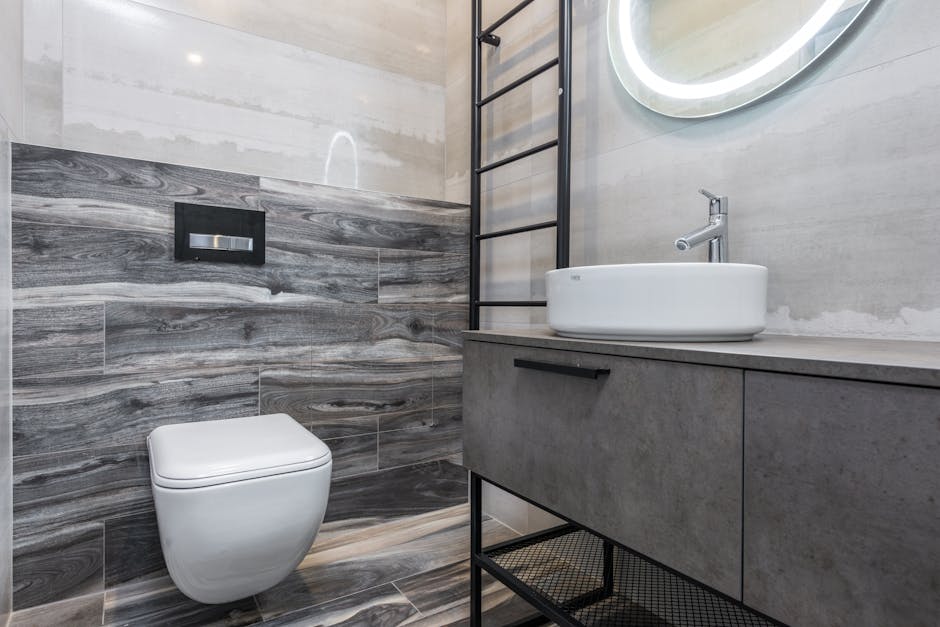
Weekend Refresh Impact vs Effort
A full bathroom renovation can cost thousands of dollars and take weeks to complete. A bathroom refresh, on the other hand, uses targeted cosmetic updates that dramatically change the look and feel of the space in a single weekend for a fraction of the price. None of these projects require a plumber, electrician, or contractor. All you need is basic tools, a trip to the hardware store, and two days of focused effort.
✨ Quick Summary: Eight budget-friendly bathroom updates — from swapping the mirror to painting the vanity — that you can complete in one weekend for $200-$500, delivering a transformation that rivals a much more expensive renovation.
The eight updates in this guide were chosen because they deliver the highest visual impact relative to their cost and difficulty. Tackle all eight for a complete transformation, or pick the three or four that address your bathroom’s biggest weaknesses.
Cost vs Impact Comparison Table
| Update | Cost | Time | Difficulty (1-5) | Impact Rating (1-5) |
|---|---|---|---|---|
| New mirror | $50-$200 | 30-60 min | 2 | 5 |
| Updated lighting | $40-$150 | 1-2 hours | 3 | 5 |
| Re-caulk and re-grout | $15-$40 | 2-3 hours | 2 | 4 |
| Replace towel bars and hardware | $30-$80 | 1-2 hours | 1 | 4 |
| Paint the vanity | $40-$80 | 3-4 hours | 3 | 5 |
| Add floating shelves | $25-$60 | 1-2 hours | 2 | 3 |
| New shower curtain + rings | $20-$60 | 10 min | 1 | 3 |
| Organize under-sink storage | $20-$50 | 1-2 hours | 1 | 3 |
Total estimated cost: $240-$720 | Total impact: Complete bathroom transformation
Weekend Schedule
Saturday Morning: Prep and Demolition
- Remove the old mirror, light fixture, towel bars, and hardware
- Clean and prep the vanity for painting (sand, degloss, clean)
- Apply primer to the vanity and let it dry
- Remove old caulk from tub, shower, and sink areas
Saturday Afternoon: Install and Paint
- Apply first coat of vanity paint
- Install the new mirror
- Re-caulk tub, shower, and sink joints
- Start grouting any discolored grout lines
Sunday Morning: Second Coats and Hardware
- Apply second coat of vanity paint
- Install new light fixture
- Mount new towel bars, toilet paper holder, and hooks
- Install floating shelves
Sunday Afternoon: Finishing Touches
- Hang the new shower curtain and rings
- Organize under-sink storage
- Place new accessories (soap dispenser, toothbrush holder)
- Final cleanup and admiration
💡 Pro Tip: Follow this Saturday-Sunday schedule in order. Starting with demolition and prep on Saturday morning gives paint and caulk maximum drying time before you install hardware and accessories on Sunday.
1. Install a New Mirror
Cost: $50-$200 | Time: 30-60 minutes | Difficulty: 2/5 | Impact: 5/5
Builder-grade plate mirrors are functional but bland. Replacing one with a framed mirror adds style and serves as the visual anchor of the room.
Step-by-step:
- Carefully remove the existing mirror. If it is glued to the wall, slide a thin wire or piano wire behind it to cut through the adhesive. Wear gloves and safety glasses in case the mirror cracks.
- Clean the wall behind the mirror and repair any damage from adhesive or mounting clips.
- Locate wall studs with a stud finder and mark them. If the new mirror has a French cleat or bracket, mount it into at least one stud.
- Hold the new mirror in position and mark mounting points. Have a helper hold it while you check level.
- Install mounting hardware according to the mirror’s instructions. Hang the mirror and verify it is level.
- If the mirror frame has a gap against the wall, run a small bead of clear caulk along the top edge to prevent moisture from getting behind it.
Pro tip: Choose a mirror that is slightly wider than the vanity for a more modern, proportional look. Round or oval mirrors add softness to a room dominated by straight lines and rectangular tiles.
2. Update the Lighting
Cost: $40-$150 | Time: 1-2 hours | Difficulty: 3/5 | Impact: 5/5
Outdated light fixtures are one of the biggest visual offenders in bathrooms. A modern vanity light with the right color temperature transforms how the entire room looks and feels.
Step-by-step:
- Turn off the circuit breaker for the bathroom. Confirm power is off with a non-contact voltage tester.
- Remove the old light fixture by unscrewing the mounting hardware and disconnecting the wires. Note the wire colors and connections.
- If the new fixture’s mounting bracket is different from the old one, install the new bracket on the electrical box.
- Connect the wires: white to white (neutral), black to black (hot), and green or bare copper to the ground screw. Secure connections with wire nuts.
- Tuck the wires into the electrical box, mount the fixture to the bracket, and install the light bulbs.
- Restore power and test the fixture.
- Choose LED bulbs in the 2700K to 3000K range for warm, flattering light in the bathroom.
Safety warning: Always turn off the breaker and verify with a voltage tester before touching any wiring. If you encounter unfamiliar wiring configurations, hire a licensed electrician.
3. Re-Caulk and Re-Grout
Cost: $15-$40 | Time: 2-3 hours | Difficulty: 2/5 | Impact: 4/5
Discolored caulk and stained grout make even a clean bathroom look neglected. Fresh caulk and grout instantly brighten tile areas and prevent water damage.
Step-by-step:
- Remove old caulk with a utility knife or oscillating tool. Scrape off all residue.
- For grout, apply a grout pen or grout colorant to refresh the color without removing and replacing the grout entirely. For severely damaged grout, use a grout removal tool to scrape out the old grout to a depth of 1/8 inch.
- Clean all surfaces with rubbing alcohol and let them dry.
- Fill the tub with water before caulking to open the joint to its maximum width.
- Apply silicone caulk in a steady bead along tub and shower joints. Smooth with a wet finger.
- If applying new grout, mix the grout to the consistency specified on the package and press it into the joints with a grout float held at a 45-degree angle. Wipe excess with a damp sponge after 15 minutes.
- Let caulk cure for 24 hours and grout cure for 48 hours before exposure to water.
Pro tip: Grout pens are a fast shortcut for refreshing grout color without the mess of regrouting. They work well on grout that is stained but structurally sound.
4. Replace Towel Bars and Hardware
Cost: $30-$80 | Time: 1-2 hours | Difficulty: 1/5 | Impact: 4/5
Matching towel bars, hooks, toilet paper holders, and cabinet knobs in a coordinated finish creates a cohesive designer look. Brushed nickel, matte black, and brushed gold are the most popular modern finishes.
Step-by-step:
- Remove existing towel bars, hooks, and toilet paper holders by loosening the set screws (usually on the underside) and sliding the bar off the brackets. Unscrew the brackets from the wall.
- Fill old screw holes with spackle if the new hardware mounts in a different position. Sand smooth after drying.
- Hold the new mounting brackets in position and mark screw holes. Use a level to ensure horizontal alignment.
- Drill pilot holes and install wall anchors if you are not hitting a stud. Screw the brackets into place.
- Attach the bars, hooks, or rings to the brackets according to the manufacturer’s instructions.
- Replace cabinet knobs and drawer pulls while you are at it. Choose the same finish as the towel hardware for a unified look.
📌 Key Point: Buy all your hardware from the same product line to ensure the finish matches perfectly. Different manufacturers use slightly different shades of the same finish name.
5. Paint the Vanity
Cost: $40-$80 | Time: 3-4 hours (plus drying time) | Difficulty: 3/5 | Impact: 5/5
Painting a dated oak or cherry vanity white, gray, or navy blue is one of the most dramatic single changes you can make in a bathroom.
Step-by-step:
- Remove cabinet doors and drawers. Remove all hardware (hinges, knobs, pulls) and set aside.
- Clean all surfaces with TSP (trisodium phosphate) cleaner or a degreasing solution to remove soap residue and grime.
- Sand all surfaces with 150-grit sandpaper to create a rough surface for paint adhesion. Wipe away dust with a tack cloth.
- Apply one coat of bonding primer designed for slick surfaces. Let it dry for the time specified on the label.
- Apply the first coat of cabinet-grade paint using a foam roller for flat surfaces and an angled brush for details. Foam rollers produce a smoother finish with fewer brush strokes.
- Allow 4-6 hours of drying time, then apply the second coat using the same technique.
- Reattach doors and drawers after the paint has cured for at least 24 hours. New hardware completes the transformation.
Pro tip: Cabinet-grade alkyd or hybrid enamel paints produce a harder, more durable finish than standard latex wall paint. They self-level to reduce brush marks and resist moisture, chipping, and yellowing. The extra cost per quart is well worth it for a surface that gets daily use.
6. Add Floating Shelves
Cost: $25-$60 | Time: 1-2 hours | Difficulty: 2/5 | Impact: 3/5
Floating shelves add storage and display space above the toilet, beside the mirror, or on any open wall. They are especially valuable in small bathrooms where counter space is limited.
Step-by-step:
- Choose moisture-resistant shelves. Solid wood with a sealed finish, bamboo, or metal shelves hold up best in humid bathroom environments. Avoid particleboard or unfinished MDF.
- Determine shelf placement and spacing. Shelves above the toilet should be at least 24 inches above the tank lid. Multiple shelves look best with 10-12 inches of vertical space between them.
- Locate wall studs with a stud finder and mark their positions.
- Hold the mounting bracket against the wall, check level, and mark screw holes.
- Drill pilot holes and secure the bracket. Use wall anchors if studs are not available at your desired location, but choose anchors rated for at least 50 pounds.
- Slide the shelf onto the bracket and test with weight before loading.
- Style the shelves with a mix of functional items (folded towels, baskets for toiletries) and decorative touches (a small plant, a candle).
Pro tip: Use matching baskets or containers on the shelves to keep small items organized and prevent the shelves from looking cluttered. Woven baskets in natural tones add warmth to the space.
7. New Shower Curtain and Rings
Cost: $20-$60 | Time: 10 minutes | Difficulty: 1/5 | Impact: 3/5
The shower curtain occupies a large amount of visual real estate in most bathrooms. Upgrading from a plain white curtain to one with texture, pattern, or color ties the whole room together.
Step-by-step:
- Remove the old curtain and rings from the rod.
- Choose a new curtain that complements your updated hardware finish and vanity color. A fabric curtain with a separate waterproof liner looks more luxurious than a single plastic curtain.
- Select rings that match your new hardware finish. Roller-ball rings glide smoothly and eliminate the frustration of snagging rings.
- Hang the liner on the inside of the tub and the decorative curtain on the outside.
- Adjust the curtain length. The liner should hang inside the tub, and the decorative curtain should hang about half an inch above the floor.
Pro tip: A curved shower curtain rod (also called a bow rod) pushes the curtain outward, creating more elbow room inside the shower. It is a minor investment that significantly improves the shower experience in standard-sized tubs.
8. Organize Under-Sink Storage
Cost: $20-$50 | Time: 1-2 hours | Difficulty: 1/5 | Impact: 3/5
The space under the bathroom sink typically becomes a chaotic dumping ground. Organizing it with simple storage solutions makes daily routines smoother and keeps cleaning supplies accessible.
Step-by-step:
- Remove everything from under the sink. Discard expired products, duplicates, and anything you have not used in the past year.
- Clean the cabinet interior thoroughly and apply a peel-and-stick shelf liner if the surface is worn.
- Measure the interior dimensions, noting the location of pipes and the P-trap, which limits what fits.
- Install a small set of stackable drawers or slide-out bins that fit around the plumbing. Many companies make under-sink organizers specifically designed to accommodate pipes.
- Use a tension rod across the cabinet interior to hang spray bottles by their triggers, freeing up floor space.
- Group items by category: cleaning supplies on one side, personal care on the other. Place frequently used items in the most accessible positions.
- Add a small turntable (lazy Susan) for bottles that tend to get pushed to the back and forgotten.
⚠️ Important: Line the bottom of the cabinet with a waterproof mat or tray. If a pipe fitting ever develops a slow leak, the mat catches the water before it damages the cabinet floor, giving you time to notice and fix the problem.
Making It All Come Together
The secret to a bathroom refresh that looks intentional rather than piecemeal is choosing a cohesive color palette and sticking to one hardware finish throughout. Pick a wall color, decide on the hardware finish (matte black, brushed nickel, or brushed gold), and select accessories that fit within that palette.
A weekend bathroom refresh proves that you do not need to gut a bathroom to make it feel new. Strategic updates to the most visible elements — the mirror, lighting, hardware, and vanity — create a cumulative effect that rivals a much more expensive renovation. The entire project pays for itself in satisfaction and added home value.